
City vs. Suburbs Part II – February Real Estate Market Update – End of Winter and New Beginnings
City vs. Suburbs – Part 2: The Financial Side of Putting Down Roots
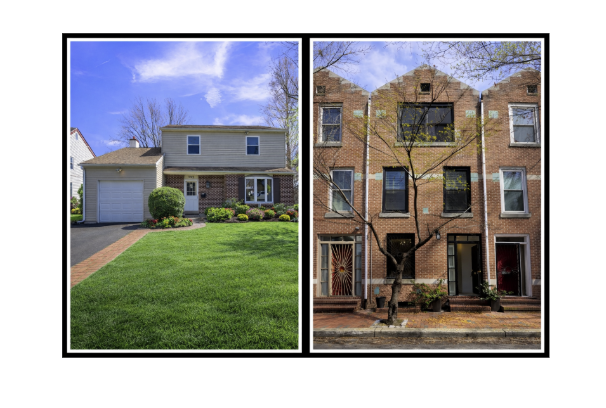
It’s been a cold start to the year here in Philly, and after our biggest snowfall in years, I know many of us are already counting down the days until spring! In the meantime, I’m excited to share this month’s newsletter, which covers a few key topics to help you stay informed and ahead of the market. We’re taking a look at what it’s like to live and raise a family in the city vs. the suburbs, along with the latest market updates across Philadelphia and the surrounding counties. I’m also sharing some exciting changes happening in my business as I grow, rebrand, and launch new tools and events designed to better serve my clients in 2026 and beyond.
1. Beyond Lifestyle — Let’s Talk Numbers
Last month we talked about lifestyle differences between the city and the suburbs. Many of you reached out with thoughtful responses — so this month I want to dig into the financial side of the decision.
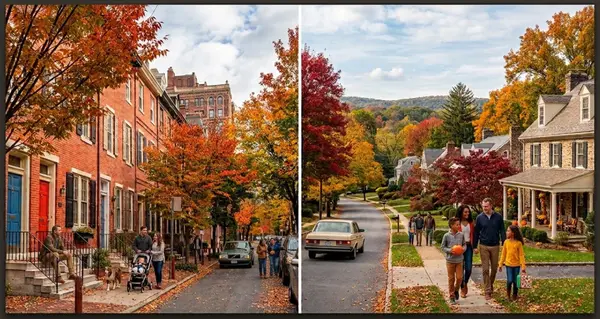
Carly grew up in Bucks County. I was raised in Montgomery County. Today we’re raising our boys in the city and we genuinely love it. However, like many families, we still debate where we’ll ultimately plant long-term roots.
Whenever we have that conversation, it quickly shifts from walkability and community to numbers.
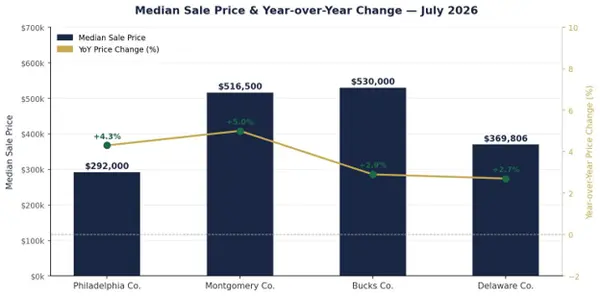
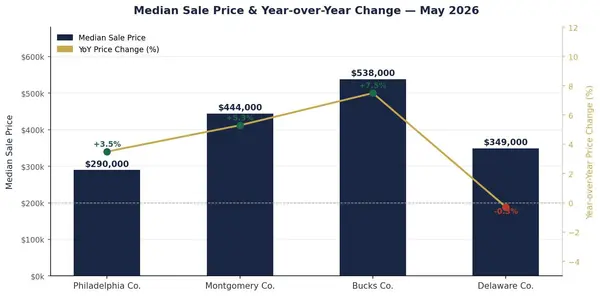
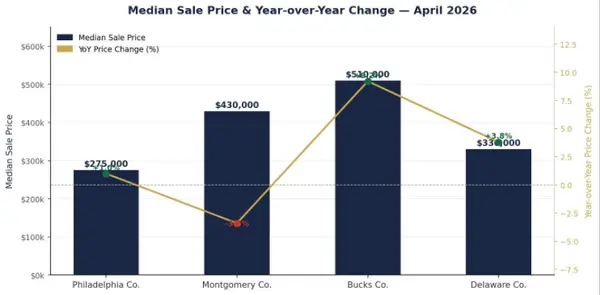
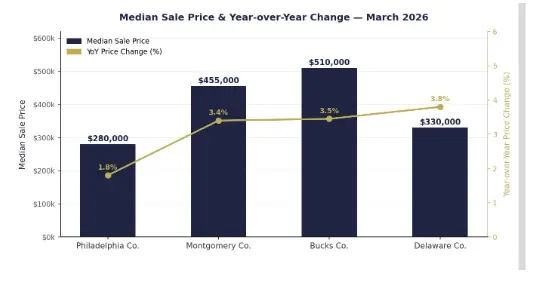
Right now in Greater Philadelphia:
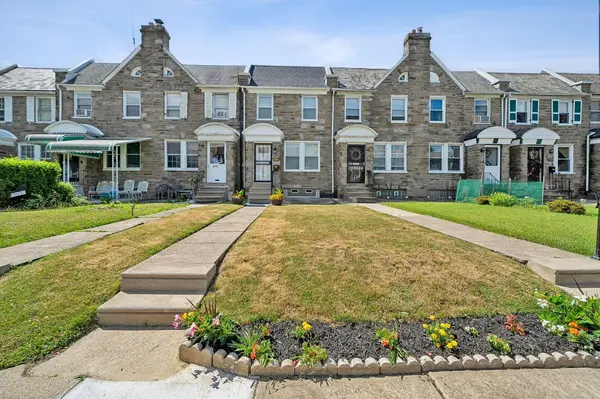
Price per square foot: Suburban buyers often get more space for the money. City buyers typically pay a premium for proximity and convenience.
Property taxes: Suburban taxes, especially in strong school districts, are often significantly higher. City taxes may be lower comparatively, but wage tax and parking can factor in.
Market behavior: Suburban family homes remain competitive. In the city, inventory has improved slightly, giving buyers more negotiating leverage than in recent years.
Appreciation trends: City values often track neighborhood growth and demand. Suburban values are heavily tied to school districts and long-term stability.
Both markets are strong. They just operate differently.
2. The Long-Term Cost Equation
The biggest financial mistake I see isn’t choosing the city or the suburbs, it’s analyzing only the monthly mortgage payment.
The real questions are:
• How long do you plan to stay?
• Is private school part of the equation?
• Will commuting costs change?
• How important is proximity to family?
• What does your 10-year plan look like?
For some families, suburban school districts offset long-term education costs. For others, staying in the city reduces overall housing expenses and increases flexibility.
For us, it’s not just about square footage. It’s about balancing lifestyle, long-term equity growth, and family proximity. We genuinely see the advantages of both, which is exactly why the conversation continues in our own home.
3. What I’m Advising Clients This Spring
We are no longer in a reactive, frenzy market, and that’s a good thing!
Buyers have time to evaluate options. Sellers need to price strategically. Negotiation has returned. That creates room for thoughtful decision-making instead of rushed moves.
If you’re considering a shift — city to suburbs or suburbs to city — the smartest first step isn’t listing your home. It’s running a full side-by-side comparison of:
• Purchase price
• Tax impact
• Long-term equity potential
• Lifestyle cost differences
When you look at the full picture, the “right” answer becomes much clearer.
I’d Love Your Perspective
Many of you have already made this choice. Some are considering it quietly.
What factored most heavily into your decision, lifestyle or finances?
And if you want to explore the numbers for your specific situation, whether that’s Philadelphia or the surrounding Suburbs, I’m happy to run side-by-side comparisons so you can see it clearly.
No pressure. Just information.
Snow, an Award and The Updated Business!
I can’t believe we had another huge snowstorm this year after barely getting anything the last few winters. As much as I love winter, I’m definitely ready for spring!
Speaking of things I’m grateful for, last month my office shared that I ranked in the top 11% internationally within Coldwell Banker — out of more than 95,000 agents. That was a complete surprise. Achievements like that don’t happen alone. They happen because of the trust you place in me, the referrals you send, and the relationships we build together. I truly appreciate every one of you and never take that support lightly.
We have been making the best of this cold winter. The boys have been keeping us busy as always. Their grandmother (Bubbie) took the boys and me to the circus recently, and they had the best time. We also checked out the car show with some friends, which included tons of climbing in and out of cars and big smiles all around. It’s been a fun stretch of winter weekends.
Last month I mentioned “The Gellman Team” was coming. I was slightly early. The full rollout will be happening in the next week or two. I wanted to make sure everything was fully up and running before making the official announcement. You’ll start to see a new logo, updated branding, and a slightly refreshed newsletter look, but the same information, same approach, and same commitment to you. This next stage is about growing in a thoughtful way and continuing to serve my clients at a high level. I’m excited for what’s ahead.
And with spring around the corner, Phillies schedule magnets have officially arrived and are being mailed out this week. If you didn’t receive one or need extras, just let me know. Here’s to warmer weather and baseball season. Thank you for being the best clients!
Stay safe and warm!
Brad
The Gellman Team
Coldwell Banker Realty
325 Chestnut St. Suite 1300
Philadelphia, PA 19106
P: 267.259.0134
E: gellmanrealestate@gmail.com
Categories
Recent Posts




"My job is to find and attract mastery-based agents to the office, protect the culture, and make sure everyone is happy! "