What Happens at the Closing Table and Everything That Leads Up to It
What Happens at the Closing Table
And Everything That Leads Up to It
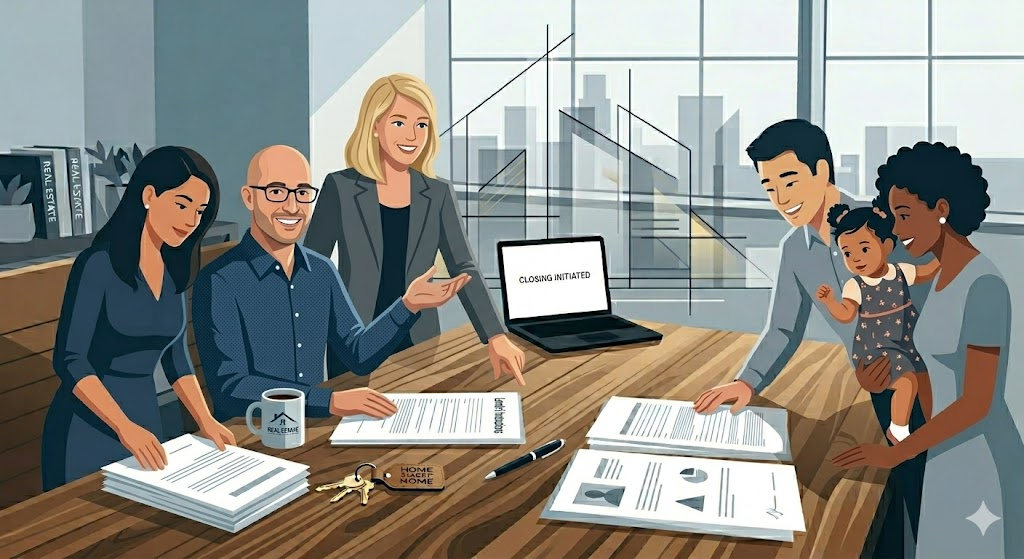
Summer is officially here, and with it comes a wave of closings. The contracts written during the busy spring market are now crossing the finish line, and buyers and sellers across the region are sitting down to make it official. At the same time, the fall market is not far off, and plenty of people are already starting to think about their next move. So this felt like exactly the right moment to walk through what a closing actually is, what leads up to it, and what everyone involved should expect when that day finally arrives.
Whether you are buying, selling, or simply planning ahead, this one is for you.
The Foundation Is Already Set
By the time a transaction reaches the final stretch, two major milestones have already been cleared.
The home inspection has been completed, findings have been reviewed, and any agreed-upon repairs or credits have been negotiated and settled. The appraisal has come in at or above the purchase price, satisfying the lender's requirement that the home is worth what the buyer is paying for it. These are significant hurdles, and clearing them is genuinely good news.
But there is still meaningful ground to cover before anyone picks up a pen at the closing table. Here is what happens next.
Behind the Scenes: The Road to Clear to Close
This is the stretch that feels quiet from the outside but is anything but behind the scenes. Several things are happening simultaneously, and each one needs to land cleanly before closing can be scheduled.
Title search and title insurance. A title company reviews the full history of the property to confirm the seller has the legal right to sell it and that there are no outstanding liens, judgments, or claims attached to the home. Title insurance is then issued to protect both the buyer and the lender going forward. This is one of the most important steps in the process and one of the least talked about.
Final loan underwriting. The buyer's lender is doing a final review of everything -- income, assets, credit, the appraisal, the property itself. This is the stage where the lender issues what is called a clear to close, which is exactly what it sounds like: confirmation that the loan is approved and the transaction is ready to move forward.
Homeowner's insurance. The buyer's insurance policy needs to be in place and confirmed before closing. Lenders require proof of coverage, and it is one of those details that can quietly delay a closing if it is not handled early.
The closing disclosure. Three business days before closing, the buyer receives a closing disclosure -- a detailed document that lays out the final loan terms, monthly payment, and every cost associated with the transaction. Read it carefully. Compare it to the loan estimate you received at the start of the process. Questions should be asked and answered before you sit down at the table, not during.
Throughout all of this, my job is to make sure nothing falls through the cracks. I stay in close contact with the lender, the title company, and all parties involved, and I make sure my clients understand exactly what is happening and why at every step. Nothing should feel like a surprise.
The Final Walkthrough
Shortly before closing -- typically within 24 hours -- the buyer does a final walkthrough of the property. This is a moment that is often misunderstood.
The final walkthrough is not a second inspection. It is a confirmation. The buyer is verifying that the property is in the same condition as when the offer was made, that any agreed-upon repairs have been completed, and that nothing has changed in a way it should not have. Appliances should be present and working. The home should be clean and empty if that was the agreement. Any personal property included in the sale should still be there.
If something is off, that is the time to address it, not after the keys have changed hands.
The Closing Table
And then comes the day itself.
Closings in Pennsylvania typically take place at the title company's office. Depending on the transaction, you may have the buyer, the seller, their respective agents, a title company representative, and sometimes the buyer's lender all in the same room, though it is increasingly common for buyers and sellers to close separately.
The paperwork is substantial. Buyers in particular will sign a significant number of documents, loan documents, title documents, transfer paperwork, and more. It can feel like a lot, and it is. But every document has a purpose, and none of it should be a mystery by the time you get there.
Here is what the closing covers:
The settlement statement. This document, often called the ALTA or HUD, breaks down every dollar changing hands. Purchase price, loan amount, closing costs, credits, prorations for taxes and utilities, agent commissions, title fees. Everything is accounted for here.
Loan documents. For buyers financing the purchase, this is the bulk of the signing. The promissory note is your commitment to repay the loan. The mortgage or deed of trust is what gives the lender a security interest in the property.
The deed. The seller signs the deed transferring ownership to the buyer. Once it is recorded with the county, the transaction is official.
Funds. The buyer brings certified funds, typically a cashier's check or wire transfer, to cover the remaining down payment and closing costs. The seller receives their proceeds, usually by wire, once everything is recorded.
And then the keys change hands.
Nothing Left Unexplained
A closing should never feel overwhelming. When I work with buyers and sellers, my commitment is straightforward, every step gets explained, every question gets answered, and nothing gets glossed over because it seems too technical or too small. By the time my clients sit down at that table, they know exactly what they are signing and why.
If you are thinking about buying or selling this fall, or if you simply have questions about how the process works, I am always happy to walk through it. That conversation costs nothing, and it might make the whole thing feel a lot less daunting.
The Gellman Team
Coldwell Banker Realty
325 Chestnut St. Suite 1300
Philadelphia, PA 19106
P: 267.259.0134
E: gellmanrealestate@gmail.com
Categories
Recent Posts



"My job is to find and attract mastery-based agents to the office, protect the culture, and make sure everyone is happy! "